
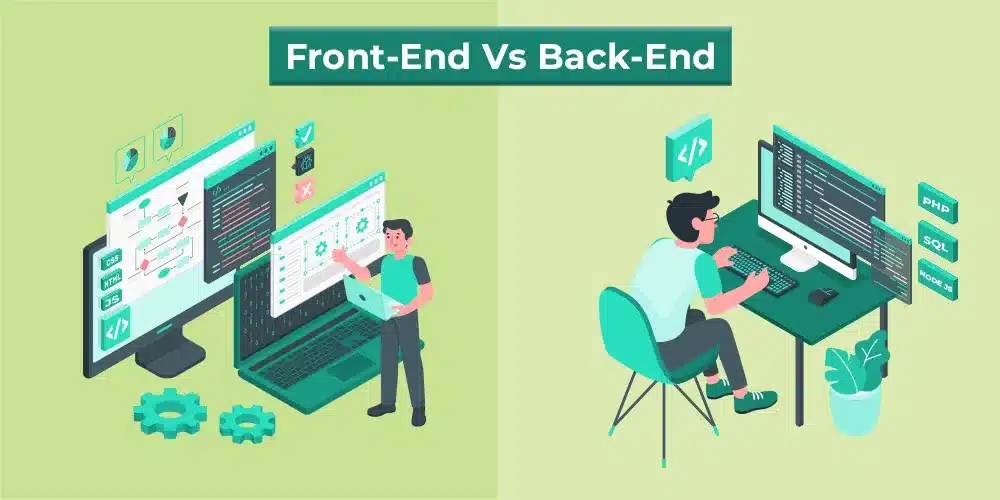
Frontend vs. Backend Development: What’s the Difference?
If you’ve ever wondered how websites and web applications actually work, you’ve probably come across the terms frontend development and backend development. While these two areas of web development work closely together, they serve very different purposes.
Think of a website as a restaurant. The dining area, menu, and customer experience are the frontend—everything visitors can see and interact with. The kitchen, inventory, and food preparation happen behind the scenes, representing the backend. Both are essential, and without either one, the restaurant couldn’t operate successfully.
Whether you’re considering a career in web development, planning to build a website, or simply curious about how modern websites function, understanding the difference between frontend and backend development is an excellent place to start.
In this guide, we’ll explain what frontend and backend development are, compare their responsibilities, explore the technologies used, and walk you through how they work together to create seamless digital experiences.
What Is Frontend Development?
Frontend development focuses on everything users see and interact with in a web browser. It’s often called the “client-side” of a website because it runs directly on the user’s device.
A frontend developer is responsible for creating:
- Website layouts
- Navigation menus
- Buttons
- Forms
- Images
- Animations
- Responsive designs
- Interactive user interfaces
Their primary goal is to deliver an attractive, intuitive, and accessible experience across desktops, tablets, and smartphones.
Common Frontend Technologies
Frontend developers typically work with:
- HTML for page structure
- CSS for styling and layouts
- JavaScript for interactivity
Popular frameworks and libraries include:
- React
- Angular
- Vue.js
- Next.js
- Tailwind CSS
- Bootstrap
They also use tools like Git, package managers, browser developer tools, and testing frameworks to build and maintain applications efficiently.
What Is Backend Development?
Backend development refers to the server-side functionality that powers a website or application behind the scenes.
Users rarely see the backend directly, but they rely on it every time they:
- Log into an account
- Make an online purchase
- Search for products
- Submit a contact form
- Save personal information
Backend developers build systems that process requests, communicate with databases, and securely deliver information to the frontend.

Common Backend Technologies
Backend developers commonly use:
Programming languages:
- Python
- Java
- PHP
- JavaScript (Node.js)
- C#
- Ruby
- Go
- MySQL
- PostgreSQL
- MongoDB
- SQL Server
Other technologies include:
- REST APIs
- GraphQL
- Authentication systems
- Cloud hosting platforms
- Docker
- Redis
Frontend vs. Backend Development: Key Differences
Although both roles contribute to the same application, they focus on different responsibilities.
| Frontend Development | Backend Development |
|---|---|
| User-facing interface | Server-side logic |
| Runs in the browser | Runs on servers |
| Focuses on design and interaction | Focuses on functionality and data |
| Uses HTML, CSS, JavaScript | Uses Python, Java, PHP, Node.js, and more |
| Creates responsive layouts | Manages databases and APIs |
| Optimizes user experience | Optimizes performance and security |
In simple terms:
- Frontend is what users see.
- Backend is what makes everything work.
How Frontend and Backend Work Together
Imagine you’re shopping online.
When you click “Add to Cart,” the frontend immediately updates the button and shopping cart icon.
At the same time, the backend:
- Receives your request
- Updates the database
- Verifies inventory
- Saves your shopping cart
- Returns confirmation to the frontend
The frontend then displays the updated cart to the user.
This constant communication happens through APIs, allowing both parts of the application to exchange data smoothly.
Step-by-Step Guide: How Frontend and Backend Work Together
Understanding the development process becomes much easier when you break it into simple steps.
Step 1: Design the User Interface
The process starts with designing the website’s layout.
Designers create wireframes and mockups showing:
- Navigation
- Buttons
- Forms
- Colors
- Typography
- Mobile responsiveness
Frontend developers then convert these designs into working web pages.
Step 2: Build the Frontend
Frontend developers use HTML, CSS, and JavaScript to build the interface.
They ensure the website:
- Looks attractive
- Loads quickly
- Works across browsers
- Is mobile-friendly
- Meets accessibility standards
At this stage, the interface may still use placeholder data.
Step 3: Develop the Backend
Backend developers build the server-side functionality.
This includes:
- Creating databases
- Writing business logic
- Setting up authentication
- Processing user requests
- Managing application security
The backend becomes the engine powering the website.
Step 4: Connect Using APIs
Application Programming Interfaces (APIs) allow the frontend and backend to communicate.
For example:
A user submits a registration form.
The frontend sends the information to the backend.
The backend:
- Validates the data
- Stores it in the database
- Creates a user account
The frontend then displays a success message.
Step 5: Test the Entire Application
Developers test both sides together to ensure everything works correctly.
Testing includes:
- Functionality
- Security
- Performance
- Browser compatibility
- Mobile responsiveness
- Error handling
Any bugs are fixed before deployment.
Step 6: Deploy and Maintain
Once testing is complete, the application is deployed to production.
Ongoing maintenance includes:
- Updating software
- Improving security
- Fixing bugs
- Adding new features
- Monitoring performance
Successful websites continue evolving long after launch.
Skills Required for Frontend Development
A successful frontend developer usually develops expertise in:
- HTML
- CSS
- JavaScript
- Responsive design
- Accessibility
- UI/UX principles
- Git
- Frameworks like React or Vue
- Browser debugging
- Performance optimization
Creativity and attention to detail are especially valuable because frontend developers shape the user experience.
Skills Required for Backend Development
Backend developers typically need strong analytical and problem-solving skills.
Important technical skills include:
- Server-side programming
- Database management
- API development
- Authentication
- Security best practices
- Cloud deployment
- Version control
- Caching
- Performance optimization
Backend development often requires thinking about scalability, reliability, and system architecture.
Can One Developer Do Both?
Yes.
Developers who work on both frontend and backend are known as full-stack developers.
A full-stack developer can:
- Design user interfaces
- Build databases
- Create APIs
- Deploy applications
- Debug across the entire system
This versatility makes full-stack developers especially valuable for startups and small teams.
Which Career Path Should You Choose?
Choosing between frontend and backend development depends on your interests.
Frontend development may suit you if you enjoy:
- Visual design
- User experience
- Interactive interfaces
- Creativity
- Animation
Backend development may be a better fit if you enjoy:
- Logic
- Databases
- Algorithms
- Security
- Building systems
If you enjoy both, becoming a full-stack developer can open even more opportunities.
Common Misconceptions
Frontend Is Easier Than Backend
Not necessarily.
Frontend development requires deep knowledge of browser behavior, accessibility, responsive design, and performance optimization.
Backend Doesn’t Need Creativity
Backend developers solve complex architectural problems every day. Creativity plays a major role in designing efficient, scalable systems.
You Must Learn Everything at Once
Many successful developers specialize in one area first before expanding their skills over time.
Best Practices for Learning Web Development
If you’re just getting started, consider this learning path:
- Learn HTML.
- Master CSS.
- Learn JavaScript fundamentals.
- Build small frontend projects.
- Learn Git.
- Study APIs.
- Choose one backend language.
- Learn databases.
- Build full-stack projects.
- Practice consistently and create a portfolio.
Hands-on experience is one of the most effective ways to strengthen your skills.
Frequently Asked Questions
What is the main difference between frontend and backend development?
Frontend development focuses on the parts of a website users see and interact with, while backend development handles server-side logic, databases, and application functionality.
Is frontend easier than backend?
Neither is inherently easier. Frontend emphasizes user interfaces and browser behavior, while backend focuses on application logic, data management, and scalability. The right choice depends on your interests and strengths.
Can I become a full-stack developer?
Yes. Many developers begin by specializing in either frontend or backend development before expanding into both areas. With consistent practice, it’s possible to become proficient across the full web development stack.
Which programming language should beginners learn first?
JavaScript is a strong starting point because it’s essential for frontend development and can also be used on the backend with Node.js, allowing you to build complete web applications using one language.
Do frontend and backend developers work together?
Absolutely. Frontend and backend developers collaborate closely to create websites and applications that are both visually appealing and fully functional, often communicating through APIs.
Conclusion
Understanding frontend vs. backend development is fundamental to understanding how modern websites and web applications are built. Frontend development shapes the user experience through responsive layouts and interactive interfaces, while backend development powers the underlying systems that store data, process requests, and keep everything running securely.
Neither discipline is more important than the other—they’re complementary parts of the same solution. Whether you’re pursuing a career in technology, hiring developers, or planning your next website project, knowing how these two roles work together will help you make better decisions and appreciate the complexity behind every click.


